
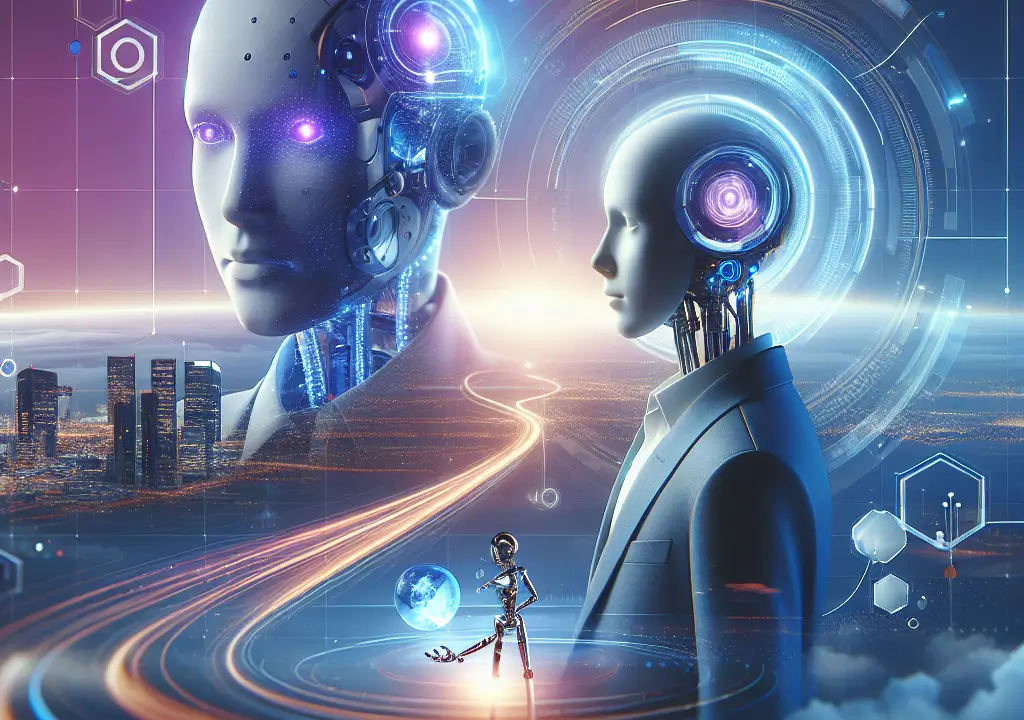
What if the next AI doesn’t just assist us, but outcreatives us? Imagine machines generating masterpieces, penning novels that evoke tears, and composing symphonies that resonate with the human soul. This provocative scenario isn’t far-off fantasy; it’s creeping closer every day.
Enter the world of AI algorithms that can analyze vast datasets faster than any human could dream. Recently, a renowned AI generated a painting considered a masterpiece that even art critics struggled to differentiate from works by renowned artists. This blurring of lines ignites a fierce debate on the essence of creativity. Is it purely the act of creation, or the emotional resonance it evokes that matters? If AI can replicate or even enhance human creativity, what does this mean for our understanding of intelligence itself?
The implications are staggering. As machines potentially become the new artists, writers, and musicians of our era, we must grapple with profound questions: What does it mean to be ‘intelligent’? If a machine can create in ways that inspire and move us, does it become a more evolved form of intelligence? This challenge might redefine our relationships not only with technology but also with each other.
Creativity has long been viewed as a uniquely human trait, one that stems from emotional depth, lived experiences, and a subconscious processing of the human condition. Now, we face technology that, although devoid of feelings, can synthesize countless perspectives and experiences into cohesive works of art and stories. It’s a startling confrontation with our own limitations and invites us to reconsider our roles in this creative landscape.
But it’s not just an academic exercise; it has tangible consequences for industries reliant on these forms of expression. How do artists, musicians, and writers compete with a non-human entity that can potentially churn out endless content with no emotional fatigue? The preservation of human creativity becomes crucial as we push for innovation. Rather than viewing AI as a competitor, it should be regarded as an intriguing collaborator. What if we combined the unbounded imagination of AI with the emotional depth only humans possess? This collaboration could lead creatives into uncharted territories.
Looking ahead, the path is layered with complexities. On one end, we must establish ethical guidelines for AI’s role in creative fields. Will there be credit allocated to AI-generated pieces? How do we value originality when we can generate ‘originals’ in seconds? Or will we create systems that prioritize human artistry, relegating AI to a supporting role? The unresolved conflict between machine efficiency and human creativity brings us face to face with the necessity of redefining value in art and originality.
Moreover, the philosophical implications will fuel endless discussions. Is intelligence measured by creativity alone? What if we embrace a world where AI-and-human partnerships lead to new art forms entirely? Educators might consider revising the curriculum to incorporate AI’s transformative potential, teaching future generations about collaboration rather than competition.
Ultimately, the rise of AI that could eclipse human creativity is both awe-inspiring and unsettling. It calls for a re-evaluation of what it means to be creative, to be intelligent, and to forge connections in this new era. The symbiosis of human and machine creativity may open doors to untold possibilities, urging us to redefine ourselves and embrace a broader definition of intelligence that encompasses both human experience and artificial innovation.