
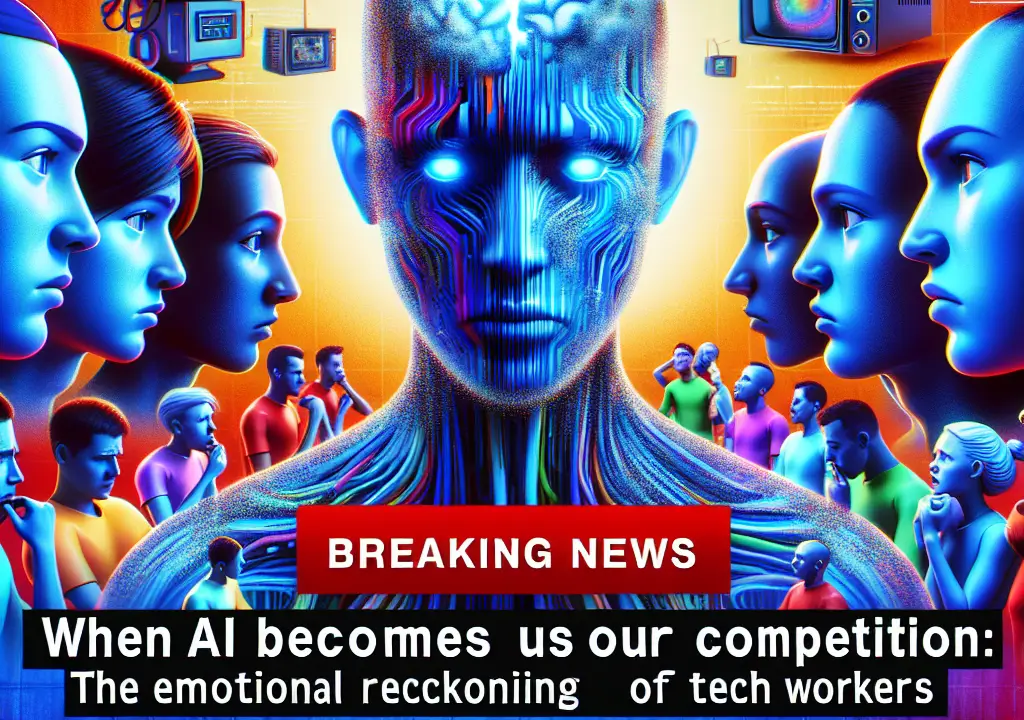
In an age where machines are designed to amplify efficiency, it’s haunting to think they might also spell the end of traditional jobs. As tech layoffs surge, workers find themselves grappling with an unsettling question: Is the very AI that promised to enhance our productivity now a threat to our livelihoods?
The tech landscape has drastically changed in recent months, with major companies announcing massive layoffs as they pivot to more efficient, cost-saving measures. High-profile firms, once considered stable and innovative powerhouses, are now confronting the stark reality of an evolving workforce characterized by rapid automation. As businesses increasingly rely on artificial intelligence systems for everything from customer service to software development, the human element seems to be fading fast. The promise of a tech utopia, where AI liberates us from mundane tasks, is now overshadowed by an alarming trend: a workforce displaced by its own creation.
This shift impacts not just those laid off but also those who remain. The emotional toll on workers is palpable. Individuals once filled with a sense of purpose in their roles now wrestle with feelings of inadequacy and fear. Could a machine produce code faster, troubleshoot better, or even brainstorm more brilliantly than a person could? As rumors circulate about AI’s capabilities, workers face an existential crisis. The irony isn’t lost on them; they cultivated the technology that now threatens to render their skills obsolete.
The shift is felt across the board, from software engineers lamenting the rise of generative models capable of writing code to marketers worrying that algorithms will predict consumer behavior better than human intuition ever could. The emotional effects are profound. Anxiety, loneliness, and disillusionment set in, with many feeling disconnected from a workplace culture that once celebrated creativity and collaboration. It raises the question of ethics in technological advancement: at what point does pursuing efficiency become morally and socially detrimental?
Why does this matter? The way we navigate this crossroads between human talent and artificial prowess could shape not just the tech industry, but the fabric of society itself. Creativity, empathy, and unique human experiences are aspects of work that machines cannot replicate. The equation isn’t simple: while AI can automate processes and analyze massive amounts of data, it cannot feel, understand nuance, or craft stories steeped in emotional depth.
However, without a human touch, the very innovation that drives technological advancement may stagnate, leading to a cold, sterile economy devoid of the warmth and intuition that humans contribute. As individuals confront their places in this new landscape, they must also reckon with the themes of resilience and adaptability. Those who pivot toward blending human creativity with AI capabilities may emerge as the catalysts for the next wave of innovation.
So, what happens next? Workers must embrace continuous learning, adaptation, and collaboration with AI, rather than viewing it solely as a competitor. Companies in turn must prioritize transparent communication, employ compassionate restructuring strategies, and invest in reskilling their workforce. The road ahead may not be smooth, but it can pave the way for a harmonious future where human creativity and AI work in tandem. While the notion of machines outshining human potential is daunting, it also opens doors for redefining what value means in the workforce.
By navigating these emotional landscapes and aligning human ingenuity with technological prowess, we can foster an environment where both humans and machines thrive, creating a workplace culture that celebrates both innovation and empathy, ensuring no one is left behind in the wake of progress.