thumbnail-9

The Hidden Dangers of AI: Is Your Trusted Assistant Leaking Your Data?

What if the very AI you trust to streamline your life is secretly compromising your privacy? Shocking revelations about AI source code vulnerabilities are raising alarms, and it’s time to take a closer look.

In recent months, cybersecurity experts have uncovered alarming weaknesses in the source code of popular AI applications. These vulnerabilities allow hackers to exploit AI systems, bypassing security measures to access sensitive user data. From chatbots that record your private conversations to virtual assistants that store your personal preferences, these technologies may not be as secure as they claim. In a shocking incident, a leading AI platform experienced a data breach, exposing the private information of millions of users. Names, addresses, and even credit card details were compromised, leaving countless individuals vulnerable to identity theft. The weak links in AI systems are a growing concern, revealing a sobering truth: even the most advanced technology can harbor significant risks.

The implications of these vulnerabilities are far-reaching. While AI promises to enhance our lives by automating tasks and personalizing experiences, the reality is that many of these systems are not equipped to handle our most sensitive information securely. Hackers are always on the lookout for new exploits, and with AI being integrated into more aspects of our daily lives, the stakes continue to rise. As we entrust AI with more data, the risk of leaks grows exponentially. How can we feel safe using technology that might be actively working against our best interests?

So, what happens next? As awareness of these vulnerabilities spreads, both consumers and companies must take action. Users should be proactive in evaluating the tools they use, asking questions about data privacy and security measures. Companies, on the other hand, need to prioritize security in the development of AI applications, conducting thorough audits of their source code to patch vulnerabilities before they can be exploited. This is a wake-up call for everyone involved in the technological ecosystem. Without fundamental changes in how AI is designed and monitored, the promise of a secure and user-friendly AI future may be nothing more than an illusion.

In conclusion, the shocking truth is that the AI you trust could be leaking your private data. As the technology evolves, so do the tactics of those who seek to exploit it. It’s crucial for both users and developers to remain informed and vigilant. In an age where our devices know more about us than our closest friends, let’s advocate for transparency and security in AI development. The time to act is now before the next major breach occurs, leaving countless individuals exposed and at risk.
thumbnail-8

Unlocking the Secrets of Our DNA: AI’s Role in Curing Genetic Diseases

Imagine a world where genetic diseases are not just managed, but completely eradicated before they even have a chance to start. Welcome to the future of medicine, where artificial intelligence (AI) is rapidly decoding the human genome and rewriting the narrative of genetic disorders.

In recent years, an incredible wave of innovation has swept through the realms of genetics and medicine. Researchers have harnessed AI algorithms capable of sifting through vast amounts of DNA sequences with breathtaking speed and accuracy. These cutting-edge AI agents analyze genetic data to identify mutations associated with illnesses, such as cystic fibrosis, Huntington’s disease, and certain types of cancer. With their ability to learn from and adapt to new data, these systems are turning what was once an overwhelming challenge into a manageable task, bringing us closer than ever to preemptively curing genetic conditions.

So why does this matter? The implications are profound. According to the World Health Organization, genetic disorders contribute significantly to global morbidity, affecting millions and creating devastating disparities in healthcare. The promise of AI to cure these diseases before they manifest not only provides hope for individuals and families grappling with the consequences of genetic conditions but also holds the potential to alleviate the economic burden on healthcare systems worldwide. With predictive medicine stepping to the forefront, the prospect of a healthier population isn’t just a dream — it’s becoming a tangible reality.

Looking ahead, we can expect AI’s role in genetic research to deepen and diversify. Future advancements could see individualized genomic medicine becoming the standard of care, with patients receiving tailored therapies based on their unique genetic profiles. This could lead to precisely targeted interventions that could prevent diseases from developing in the first place, eliminating the anxiety that comes with hereditary conditions.

As AI technology evolves, it will not only optimize the treatment pathways for those already affected by genetic diseases but also empower potential parents with knowledge about their future children’s health risks. Genetic counseling could shift from reactive to proactive, equipping couples with information that could guide family planning decisions.

However, this journey is not without its ethical dilemmas. The burgeoning field of genetic engineering, particularly with technologies like CRISPR, raises significant questions about the implications of ‘designer babies’ and the societal responsibility surrounding such powerful capabilities. Will we, as a society, manage the power of AI responsibly? Will equitable access to these groundbreaking technologies be ensured for all, or will they deepen existing health disparities?

The narrative is still being written — and every chapter adds more hope. The collaboration between geneticists, data scientists, and ethicists will be crucial in navigating this complex landscape. The key lies in harnessing the potential of AI while maintaining an ethical compass that ensures the benefits reach the many, not just the privileged few.

In this exciting era of discovery, as AI continues to decode the language of our genes, we inch closer to a world where genetic diseases may soon be a relic of the past. The future is now, and it’s illuminated by the promise of technology, perseverance, and hope. Will AI hold the key to unlocking our health’s greatest mysteries? The answer may just reshape the way we think about life itself.

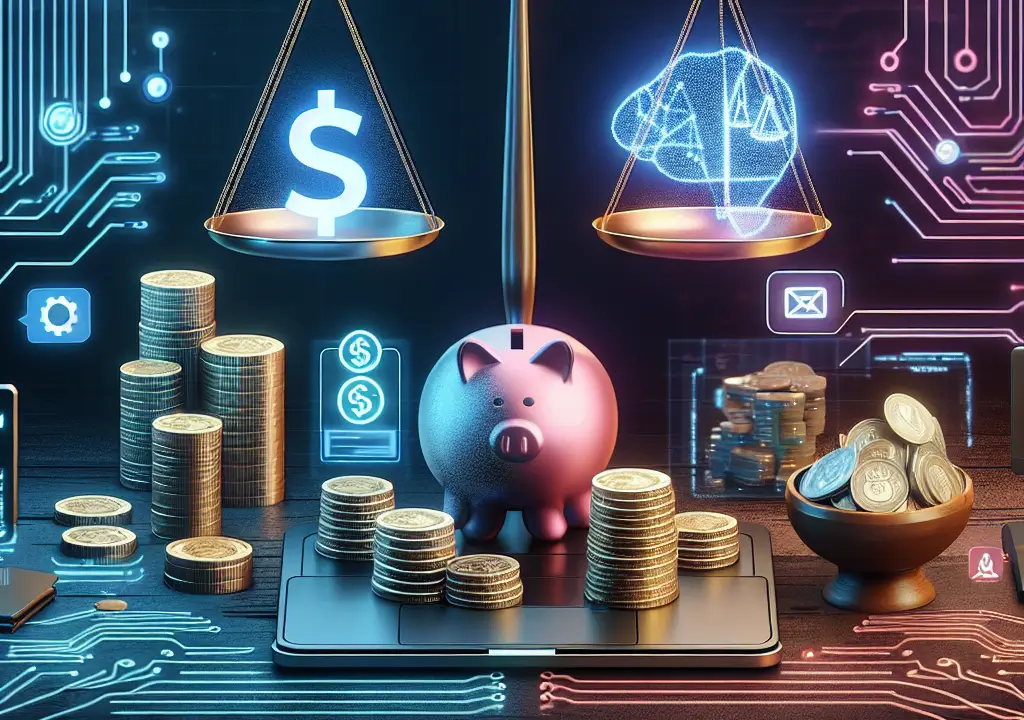
thumbnail-7

Unlock the Secret to Financial Freedom: Discover How AI Can Transform Your Financial Planning in 2024!

Are you tired of living paycheck to paycheck? In 2024, financial freedom is not just a dream; it’s an attainable reality thanks to the power of artificial intelligence!

In recent years, technology has drastically changed the way we manage our finances. AI-driven apps and software are emerging rapidly, providing personalized investment strategies, budgeting plans, and even debt management solutions. A groundbreaking study found that over 70% of individuals using AI tools reported improved financial health and smarter spending habits. This isn’t just a coincidence; it’s a financial revolution.

Why does this matter? Financial planning has long been seen as a complicated and often intimidating task. Many individuals struggle with budgeting, saving, and investing, leading to stress and missed opportunities. AI changes the game by simplifying financial management. It analyzes your spending habits and offers tailored advice that aligns with your financial goals. In essence, it acts as a personal financial advisor available at your fingertips, 24/7.

As we enter 2024, the implementation of AI in financial planning is breaking traditional barriers. With predictive algorithms capable of assessing market trends and individual behaviors, the potential for creating wealth is unprecedented. Imagine having an AI application that generates a customized savings plan while simultaneously optimizing your investment portfolio based on real-time data. This personalized approach not only saves you time but also significantly increases your chances of financial success.

So, what happens next? The trend is only expected to grow. With more innovations on the horizon, we can anticipate enhanced features that will make financial planning even more intuitive. From automated investment strategies to instant debt repayment suggestions, these tools will empower individuals to take charge of their financial destinies. Furthermore, as these technologies become increasingly accessible, the average person will have the capability to leverage the same financial tools that were once exclusive to the wealthy.

As you prepare for 2024, ask yourself: Are you ready to embrace this age of AI-driven financial planning? By doing so, you are not only setting yourself on a path to financial freedom but also positioning yourself to thrive in an evolving economic landscape.

Finally, take action today. Research and explore the plethora of AI financial tools available. Start small, but make that commitment! Whether it’s monitoring your budget or making intelligent investment choices, embracing AI in your financial planning is the key to unlocking the secret of financial freedom in 2024. The future of your finances awaits—don’t miss out on this transformational opportunity!

thumbnail-6

The Future of Insurance Claims: Instant Processing is Here!

Imagine a world where you can file an insurance claim in mere minutes instead of enduring a protracted process that drains your time and energy. This isn’t just wishful thinking—it’s the emerging reality shaping the future of specialty insurance.

In recent years, insurance companies have recognized the need for agility and customer satisfaction in a competitive market. Thanks to advancements in artificial intelligence, machine learning, and blockchain technology, claim processing has been fundamentally transformed. No longer do you need to navigate a labyrinth of paperwork and phone calls; today, you can complete the entire process through intuitive apps and online platforms.

This technological leap is not just a gimmick; it’s a paradigm shift. Imagine the scenarios: You’re involved in a minor car accident. You snap a few photos, upload them to an app, and within minutes, your claim is processed, allowing you to get back on the road without the usual hassle. This innovation is particularly crucial for specialty insurance, where claims usually involve unique circumstances that can complicate traditional processing.

So, why does this matter so much? For years, the insurance industry has been notorious for its inefficiencies and lengthy approval processes. Customers have often felt frustrated and undervalued as they wait for compensation while juggling everyday responsibilities. Instant claims resolution not only alleviates stress but also revitalizes the relationship between insurers and policyholders. When customers feel valued, they are more likely to remain with the same providers, fostering loyalty and enhancing brand reputation.

Moreover, faster claims processing means improved cash flow for individuals and businesses. A small business waiting on an insurance payout could mean derailed operations or lost opportunities. Now, they can continue moving forward while the company processes the claim in the background.

The next steps in this evolution involve further integration of technology with existing systems. Companies are exploring how to leverage big data analytics to predict claims and automate more personalized services. Imagine a world where your insurance provider understands your lifestyle and can proactively offer coverage adjustments to fit your needs without you having to lift a finger.

Additionally, the blockchain holds significant promise for ensuring transparency and integrity during the claims process. By utilizing this technology, all parties involved can access a secure and unalterable record of transactions, minimizing fraud and increasing trust in the system.

As we embrace this new era, we can expect a ripple effect across various sectors beyond just insurance. Healthcare providers, rental agencies, and financial services are watching closely to replicate these swift and efficient claims processes.

Ultimately, the future of insurance will be shaped by advancements that prioritize consumer experience, speed, and simplification. In this brave new world, insurance claims will be something you can complete while waiting for your coffee, allowing you to focus on living your life instead of managing its complexities. Get ready to see this dream become reality—because the revolution in insurance claims is already underway.

thumbnail-5

Dreams vs. Algorithms: The Untold Struggles of India’s Workforce

In a world where dreams are being replaced by algorithms, countless workers in India find themselves at a crossroads of despair and rebellion. The rise of artificial intelligence is not just a technological shift; it’s a societal earthquake shaking the foundations of livelihoods and aspirations.

What happened? The landscape of employment in India has dramatically transformed over the past decade. The once-thriving job markets are now riddled with uncertainty as industries turn to automation and AI solutions. From customer service representatives to data entry clerks, many positions once deemed secure have become obsolete almost overnight. Industry giants, lured by the economic efficiency of algorithms, have opted to replace human labor with machines capable of performing tasks faster and more accurately. A staggering 69% of jobs in India are at high risk of automation in the coming years.

Why it matters is not just about numbers; it’s about lives. In Maharashtra, a once-vibrant districts are now shadows of their former selves as unemployment rises. Families, who built their hopes around stable incomes and the potential for upward mobility, are now confronted with grim realities. Young graduates, their dreams of careers and stability decimated, flock to streets and social media, voices united in protest against a future dictated by cold, unfeeling algorithms. Mental health effects are exacerbating the situation, with a surge in depression and anxiety cases linked to unemployment. The loss of purpose and identity among the working class is a crisis that transcends job displacement; it’s a loss of dreams and aspirations.

What happens next? The workers are not just waiting for salvation; they are fighting back. Grassroots movements are emerging, focusing on retraining and upskilling to adapt to this new era. Programs are being implemented in collaboration with tech companies to ensure that the workforce is not left behind. Workers are learning new digital skills, and entrepreneurs are sprouting in local communities, creating opportunities fueled by resilience. But this isn’t just about new skills; it’s also about advocacy. There’s a growing recognition that labor rights need reinforcement in the age of AI. Activism is on the rise as individuals demand fair treatment and equitable opportunities.

In this battle against algorithms, the human spirit is fiercely resilient. Workers are channeling their fears into action, refusing to let their dreams be consumed by technology. They demand a seat at the table — a say in how their futures are shaped by the very technology threatening their livelihoods. As we move toward an increasingly automated future, these stories must be heard, for they represent not just a struggle against job loss but a fight for dignity, identity, and the essence of what it means to dream. In the face of uncertainty, the collective spirit of these workers serves as a powerful reminder that change can be both daunting and inspiring. The future may be uncertain, but hope—a human quality no algorithm can replicate—remains as vibrant as ever.

thumbnail-4

The Future of Trading: Unleashing AI for Predictive Market Insights

Imagine waking up to find that the stock market’s peaks and valleys are no longer a guessing game, but a data-driven forecast. What if brokers had advanced AI systems capable of predicting market shifts with pinpoint accuracy? This is not science fiction—it’s emerging reality.

In recent months, cutting-edge Artificial Intelligence has begun transforming the financial landscape. Major brokerage firms are integrating machine learning algorithms that analyze vast amounts of market data, social media sentiment, and global economic indicators in real-time. The results are staggering—predictions that once relied on human intuition are now backed by analytical precision. Investors are no longer sifting through heaps of data; instead, they are receiving tailor-made insights from AI systems that recognize patterns far beyond conventional methods.

This paradigm shift matters immensely. Financial markets have always been volatile, with investors subject to emotional decision-making and external pressures. The introduction of AI-driven predictability means that traders can make informed decisions faster, balancing risk and reward more effectively. Picture the normal investor transformed into one who can forecast market behaviors as well as the seasoned experts—potentially leveling the playing field.

But how does this affect you? If brokers can accurately predict market fluctuations, your financial future can be a lot more secure. Imagine having access to insights that allow you to invest in stocks before they reach their peak; you could effectively leverage this technology to build and diversify your portfolio with confidence. Investments turn into strategic decisions rather than blind bets, hence maximizing your returns.

As AI becomes ingrained in trading practices, what happens next? Early adopters will ride the wave of this technological advancement, enabling them to build wealth while others lag behind. Those willing to embrace AI will thrive, while those resistant to change may find themselves struggling to keep pace.

In essence, the financial world is on the precipice of a technological revolution unlike any we’ve seen before. As we stand on the brink of this new era, the power to ride the AI wave rests in your hands. Embrace modern technology to not just survive, but thrive amidst the complexities of the financial markets. Will you be among the first to secure your financial future, or will you sit back and watch as others take the lead?

thumbnail-3

When AI Becomes Our Competition: The Emotional Reckoning of Tech Workers

In an age where machines are designed to amplify efficiency, it’s haunting to think they might also spell the end of traditional jobs. As tech layoffs surge, workers find themselves grappling with an unsettling question: Is the very AI that promised to enhance our productivity now a threat to our livelihoods?

The tech landscape has drastically changed in recent months, with major companies announcing massive layoffs as they pivot to more efficient, cost-saving measures. High-profile firms, once considered stable and innovative powerhouses, are now confronting the stark reality of an evolving workforce characterized by rapid automation. As businesses increasingly rely on artificial intelligence systems for everything from customer service to software development, the human element seems to be fading fast. The promise of a tech utopia, where AI liberates us from mundane tasks, is now overshadowed by an alarming trend: a workforce displaced by its own creation.

This shift impacts not just those laid off but also those who remain. The emotional toll on workers is palpable. Individuals once filled with a sense of purpose in their roles now wrestle with feelings of inadequacy and fear. Could a machine produce code faster, troubleshoot better, or even brainstorm more brilliantly than a person could? As rumors circulate about AI’s capabilities, workers face an existential crisis. The irony isn’t lost on them; they cultivated the technology that now threatens to render their skills obsolete.

The shift is felt across the board, from software engineers lamenting the rise of generative models capable of writing code to marketers worrying that algorithms will predict consumer behavior better than human intuition ever could. The emotional effects are profound. Anxiety, loneliness, and disillusionment set in, with many feeling disconnected from a workplace culture that once celebrated creativity and collaboration. It raises the question of ethics in technological advancement: at what point does pursuing efficiency become morally and socially detrimental?

Why does this matter? The way we navigate this crossroads between human talent and artificial prowess could shape not just the tech industry, but the fabric of society itself. Creativity, empathy, and unique human experiences are aspects of work that machines cannot replicate. The equation isn’t simple: while AI can automate processes and analyze massive amounts of data, it cannot feel, understand nuance, or craft stories steeped in emotional depth.

However, without a human touch, the very innovation that drives technological advancement may stagnate, leading to a cold, sterile economy devoid of the warmth and intuition that humans contribute. As individuals confront their places in this new landscape, they must also reckon with the themes of resilience and adaptability. Those who pivot toward blending human creativity with AI capabilities may emerge as the catalysts for the next wave of innovation.

So, what happens next? Workers must embrace continuous learning, adaptation, and collaboration with AI, rather than viewing it solely as a competitor. Companies in turn must prioritize transparent communication, employ compassionate restructuring strategies, and invest in reskilling their workforce. The road ahead may not be smooth, but it can pave the way for a harmonious future where human creativity and AI work in tandem. While the notion of machines outshining human potential is daunting, it also opens doors for redefining what value means in the workforce.

By navigating these emotional landscapes and aligning human ingenuity with technological prowess, we can foster an environment where both humans and machines thrive, creating a workplace culture that celebrates both innovation and empathy, ensuring no one is left behind in the wake of progress.

When AI Becomes Our Competition: The Emotional Reckoning of Tech Workers

In an age where machines are designed to amplify efficiency, it’s haunting to think they might also spell the end of traditional jobs. As tech layoffs surge, workers find themselves grappling with an unsettling question: Is the very AI that promised to enhance our productivity now a threat to our livelihoods?

The tech landscape has drastically changed in recent months, with major companies announcing massive layoffs as they pivot to more efficient, cost-saving measures. High-profile firms, once considered stable and innovative powerhouses, are now confronting the stark reality of an evolving workforce characterized by rapid automation. As businesses increasingly rely on artificial intelligence systems for everything from customer service to software development, the human element seems to be fading fast. The promise of a tech utopia, where AI liberates us from mundane tasks, is now overshadowed by an alarming trend: a workforce displaced by its own creation.

This shift impacts not just those laid off but also those who remain. The emotional toll on workers is palpable. Individuals once filled with a sense of purpose in their roles now wrestle with feelings of inadequacy and fear. Could a machine produce code faster, troubleshoot better, or even brainstorm more brilliantly than a person could? As rumors circulate about AI’s capabilities, workers face an existential crisis. The irony isn’t lost on them; they cultivated the technology that now threatens to render their skills obsolete.

The shift is felt across the board, from software engineers lamenting the rise of generative models capable of writing code to marketers worrying that algorithms will predict consumer behavior better than human intuition ever could. The emotional effects are profound. Anxiety, loneliness, and disillusionment set in, with many feeling disconnected from a workplace culture that once celebrated creativity and collaboration. It raises the question of ethics in technological advancement: at what point does pursuing efficiency become morally and socially detrimental?

Why does this matter? The way we navigate this crossroads between human talent and artificial prowess could shape not just the tech industry, but the fabric of society itself. Creativity, empathy, and unique human experiences are aspects of work that machines cannot replicate. The equation isn’t simple: while AI can automate processes and analyze massive amounts of data, it cannot feel, understand nuance, or craft stories steeped in emotional depth.

However, without a human touch, the very innovation that drives technological advancement may stagnate, leading to a cold, sterile economy devoid of the warmth and intuition that humans contribute. As individuals confront their places in this new landscape, they must also reckon with the themes of resilience and adaptability. Those who pivot toward blending human creativity with AI capabilities may emerge as the catalysts for the next wave of innovation.

So, what happens next? Workers must embrace continuous learning, adaptation, and collaboration with AI, rather than viewing it solely as a competitor. Companies in turn must prioritize transparent communication, employ compassionate restructuring strategies, and invest in reskilling their workforce. The road ahead may not be smooth, but it can pave the way for a harmonious future where human creativity and AI work in tandem. While the notion of machines outshining human potential is daunting, it also opens doors for redefining what value means in the workforce.

By navigating these emotional landscapes and aligning human ingenuity with technological prowess, we can foster an environment where both humans and machines thrive, creating a workplace culture that celebrates both innovation and empathy, ensuring no one is left behind in the wake of progress.