
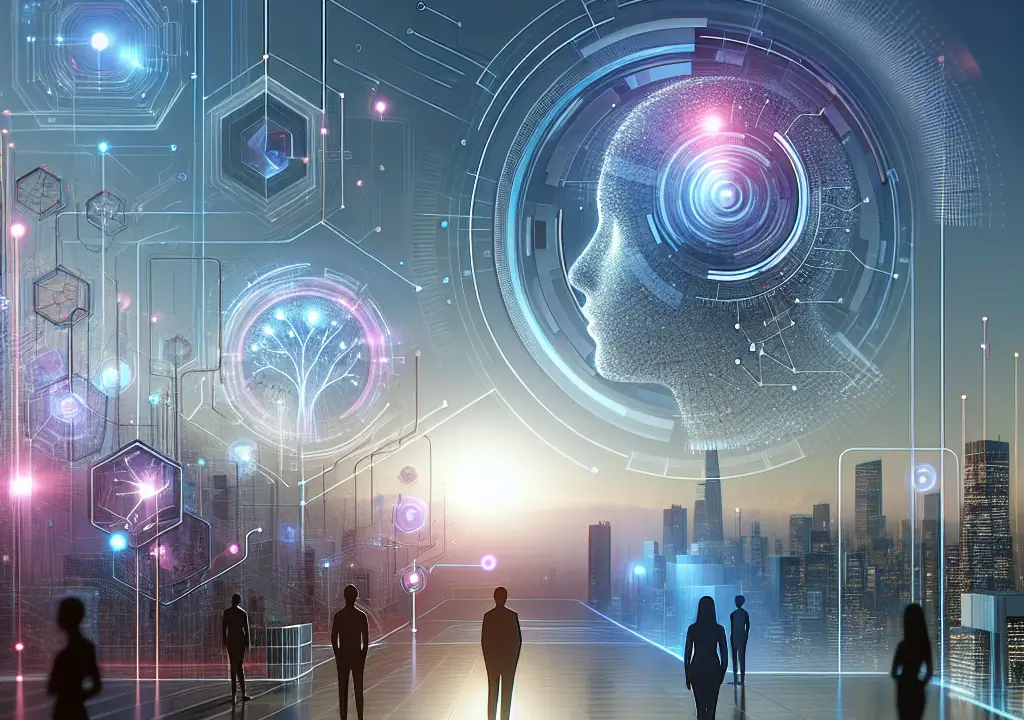
Imagine a future in which artificial intelligence not only plays a role in our day-to-day lives but also navigates the cosmos, learning from every star it encounters. This isn’t mere science fiction; this is the groundbreaking promise of SpaceX’s revolutionary approach to space exploration.
SpaceX has taken a significant leap forward by integrating advanced AI systems into its space missions. Utilizing machine learning algorithms and neural networks, the company has developed AI that can adapt and evolve based on real-time data collected from space. During a recent mission, the Falcon Heavy rocket was equipped with AI capabilities that allowed it to analyze celestial phenomena in real time, adjusting its trajectory based on uncharted variables. This innovative technology enables the spacecraft to engage with an ever-changing environment, transforming data collection from a passive to an active process.
So, why does this matter? The implications of combining AI with rocket science are staggering. Traditionally, space missions have relied on pre-defined parameters and extensive human oversight. With AI, we enter an era where spacecraft can autonomously make decisions, leading to more efficient exploration. Imagine an AI-empowered rover that collects data from Mars while learning to adapt its search patterns based on the geological diversity it encounters. The potential for discoveries increases exponentially, as AI can target areas of interest that may have gone unnoticed, unlocking secrets of our universe that have been hidden for countless eons.
Furthermore, this AI integration could mitigate the risks associated with deep space missions. By continuously learning from anomalies—whether from malfunctioning equipment or unexpected cosmic events—AI can help predict failures and address challenges autonomously. This capability could reduce the need for direct human intervention, allowing researchers to focus on innovative project development, increasing the pace of discovery and exploration.
As we look to the stars, what happens next is just as exciting. SpaceX’s integration of AI is a stepping stone toward a future where missions could even lead to interstellar travel. With the potential to design spacecraft that learn and evolve, our reach could extend far beyond our solar system. Future missions could involve collaborations with other AI systems deployed on distant planets, creating a network of sentinels ready to explore the cosmos together.
The evolution of AI in space exploration also poses intriguing questions about the role of artificial intelligence in future colonization efforts. What if AI could design living environments based on its experiences with different celestial bodies? The adaptability of AI could lead to the establishment of habitats that are not only sustainable but also optimize the quality of life for human settlers on new planets.
In conclusion, SpaceX’s pioneering approach to merging AI with rocket science isn’t just paving the way for a more efficient exploration of our immediate cosmic neighborhood; it is fundamentally redefining what it means to venture into the final frontier. As we edge closer to a reality where machines learn from the stars, the possibilities for human discovery, survival, and innovation are boundless. The cosmos is calling, and with each star, we inch closer to unveiling the mysteries of the universe—with the helping hand of AI guiding our way.