
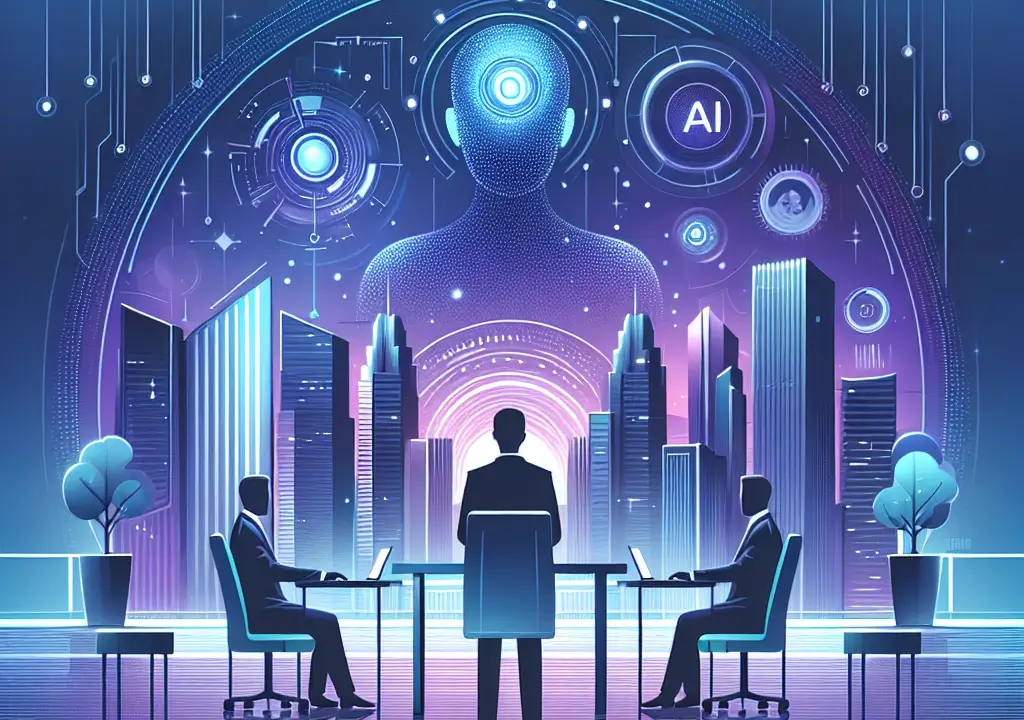
Imagine a world where your AI is not just a tool, but a companion customized to your needs, reflecting your thoughts and preferences back to you. What if the future of AI ownership isn’t dominated by corporations, but held in the hands of individuals like you?
It all started with a simple realization: technology was outpacing the human experience. Corporate giants, with their enormous budgets and resources, were developing AI that could do unimaginable things. But there was a catch; this mind-blowing technology wasn’t designed for us, the everyday users. Instead, it was designed to keep us hooked, guiding our preferences and influencing our decisions without our consent. As AI became smarter, it felt like our autonomy was slipping through our fingers.
Fast forward to today. A movement has ignited—individuals are beginning to reclaim their personal autonomy by harnessing AI that truly belongs to them. People are no longer satisfied with off-the-shelf solutions designed for the masses. The demand now is for personalized AI—tools tailored not just to enhance productivity, but to resonate on an emotional level. These personal AIs can remember our preferences, offer advice reflecting our values, and even learn to adjust their behavior based on our moods.
This isn’t just about technology; it’s about empowering individuals. Imagine Sarah, a single mom who once relied on generic AI assistants that failed to understand her challenges. Now, thanks to personalized AI, she has a digital ally that knows her schedule, remembers her son’s favorite snacks, and even offers motivational quotes that align with her personal beliefs. Sarah’s journey reflects a larger emotional awakening—a reassertion of control over tech that once felt invasive and impersonal.
Why does this shift matter? At its core, reclaiming AI ownership taps into our fundamental human desire for connection and understanding. When we interact with a personal AI that resonates with our identity and values, it can enhance our decision-making, support our mental well-being, and ultimately help us curate a lifestyle that feels authentic. This reclamation is not simply a technological upgrade; it embodies a cultural renaissance that celebrates individuality over conformity.
Moreover, as we step away from the shadows of corporate control, we are redefining ownership in the digital age. How we govern our personal data, how we engage with digital entities, and what we value in our experiences are all up for negotiation. Popularized by grassroots movements and open-source platforms, the future is here for individuals to mold. Creators, developers, and artists are collaborating to build personalized AI ecosystems that prioritize user agency.
So, what happens next? As more individuals embrace personalized AI, the landscape will inevitably shift. We will see a surge in diverse applications ranging from mental health AI companions to bespoke learning assistants that adapt to our unique styles. Governments and regulatory bodies will also have to adapt, creating frameworks that empower and protect individual rights, differentiating between corporate AI landscapes and personal experiences.
Ultimately, the ongoing revolution of AI ownership signals a powerful reminder that we are not merely passive consumers in the digital world. We are the architects of our destinies, armed with the tools of our own making. Welcome to the era where individuals reclaim their autonomy—one personalized AI at a time.